
In a season where input costs remain high and grain markets continue to feel uncertain, one Lincolnshire grower is finding reassurance in a crop that delivers both low-cost production and a guaranteed route to market.
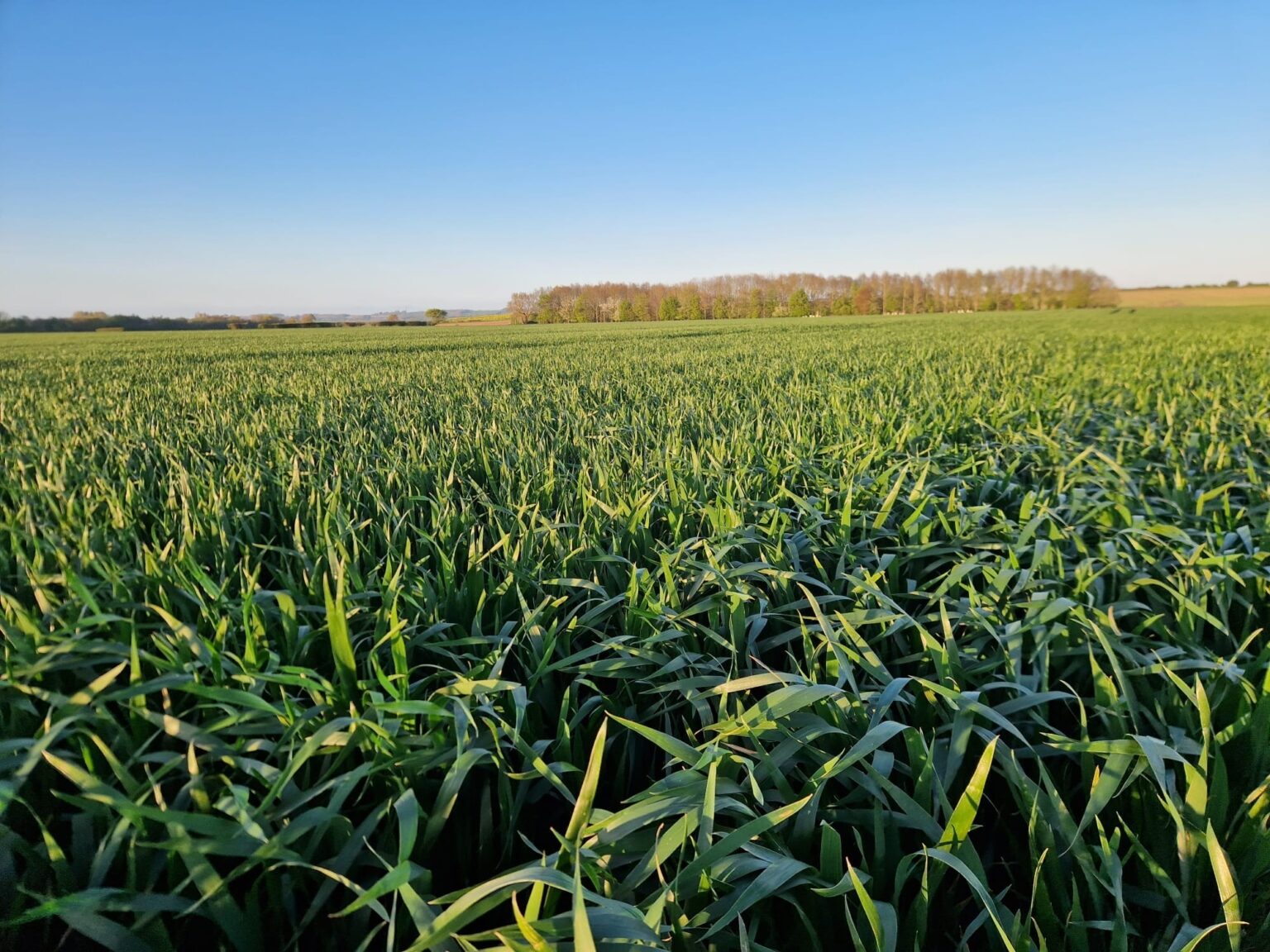
On 12 hectares of Nelson winter wheat, the results are already standing out for arable farmer, Phil Marris.
“It’s the darkest crop we’ve got on the farm, and probably the cleanest as well,” he says.
Drilled on 27th September 2025, the crop has been managed with a notably light-touch approach. Establishment included a pre-emergence herbicide for blackgrass control, followed by a single application of polysulphate fertiliser in early January to supply sulphur.
Nitrogen has been applied modestly, with around 100 kg/ha in early March and a further 77 kg/ha in April.
Aside from a targeted herbicide for wild oats, linked to a previous tramline trial, the crop has required minimal intervention.
“My other wheat varieties have all had a T0 fungicide. With Nelson, we’ve been able to hold back for a later fungicide application. It gives you a bit of breathing space.”
That flexibility is proving valuable. With reduced input requirements, time and budget can be directed where they’re needed most across the farm.
“It helps you manage everything else. You know this crop is safe, so you can focus on the ones that need attention.”
In a year where fertiliser and fuel costs remain elevated, but grain prices have failed to keep pace, that reduction in inputs is more than just convenient, it’s essential.
“Diesel’s up, fertiliser’s up, but grain prices haven’t really moved. The global market is saturated, and it’s not easy to find a home for crops.”
Against that backdrop, market security is becoming just as important as agronomy. This Nelson crop is grown on a buy-back contract with Heygates millers through COPE, offering a guaranteed outlet and a clear end use.
“With the COPE buy-back, we’ve got a £15 premium over Group 1 price if it hits spec. But more importantly, we know where it’s going. It’s all taken care of.”
That certainty stands in contrast to other wheat grown for the open market, where volatility and over supply, exacerbated by global events and strong recent harvests, have made marketing more challenging. “It’s reassuring. You’re not left wondering where your grain will end up,” says Phil.
Phil explains that the combination of low input requirements and a secure, premium-backed market is a compelling one.
“There’s definitely a shift happening. Farmers are looking for something more reliable, working with businesses that understand what we need.”
With organisations like COPE focusing on variety development, farmer relationships and dedicated end markets, crops like Nelson are increasingly fitting that brief.
“It’s simple, really,” says Phil. “Lower risk, lower input, and you know where your crop is going.”