A Lincolnshire arable farmer is seeing clear benefits from introducing cover crops for the first time, transforming challenging heavy land and enabling direct drilling where it previously wouldn’t have been considered.
Phil Marris, who farms near Scunthorpe with his father Richard and brother, Andrew, runs an entirely arable operation with a diverse rotation including winter wheat (such as Nelson), spring barley, triticale, rye, peas, winter linseed, lupins and beans. Like many growers on heavy land, soil structure and workability have long been limiting factors.
“We wanted to start improving the soil and had been listening to others talking about cover crops,” he explains. “With support from Lincolnshire-based seed and grain specialist, COPE, we decided to give it a go, starting with some of our more difficult fields.”
Cover crops were established following harvest in autumn 2025 to prepare the soil for spring cropping in 2026. The focus was on fields with the most challenging conditions, particularly heavier clay soils that had previously been written off as problematic.
“We put them into what we thought was some of our worst land,” Phil says. “But they’ve made a real difference, improving stability and helping to open the soil up.”
Across the farm, soil types vary from heavy clay to lighter sandy land, and the approach was tailored accordingly. On the heavier ground, the aim was to break up tight, compacted soils, while on lighter land the priority was building organic matter.
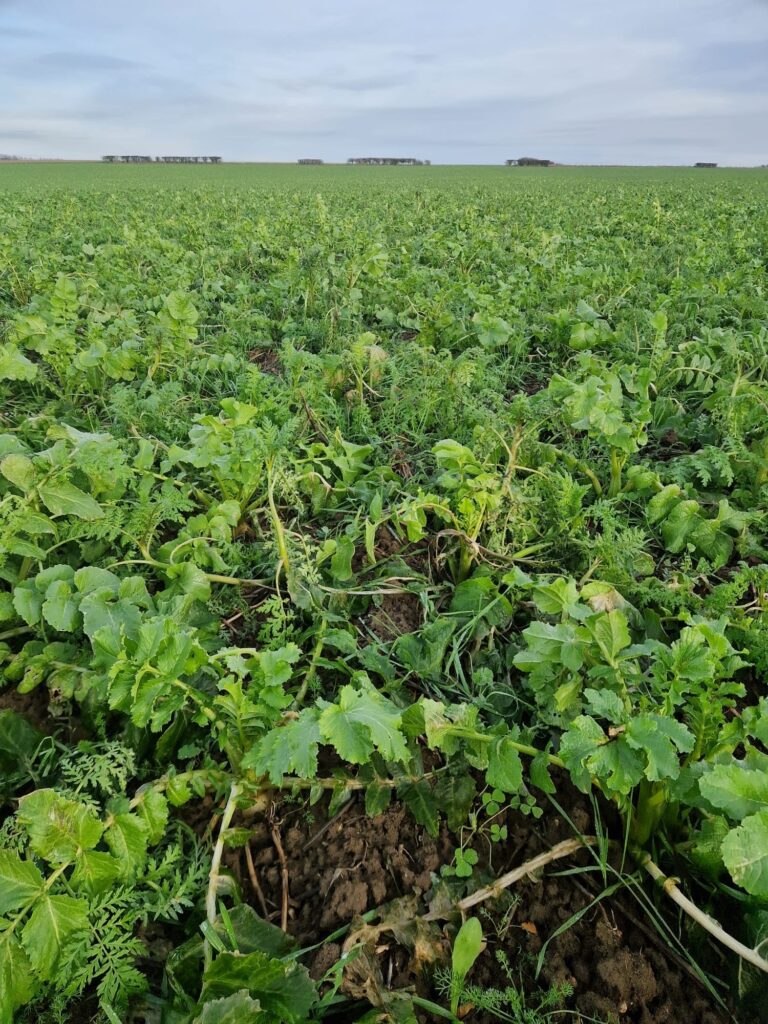
“The chosen mix included black oats, spring vetch, buckwheat, clover, phacelia and linseed, delivering a range of rooting depths and structures,” explains George Mallender, grass and small seeds specialist at COPE.
“The mix gave us strong, penetrating roots that really helped break through the surface and create a workable tilth,” Phil explains. “Previously, the heavy magnesium clay would form big lumps with no structure or channels. Now we’re starting to see proper aggregation, better drainage and improved air movement.”
Livestock were also introduced to graze the cover crops, adding another layer of soil benefit and nutrient cycling.
“The sheep have helped us get more out of the cover crops, and it all feeds back into improving soil condition,” he adds.
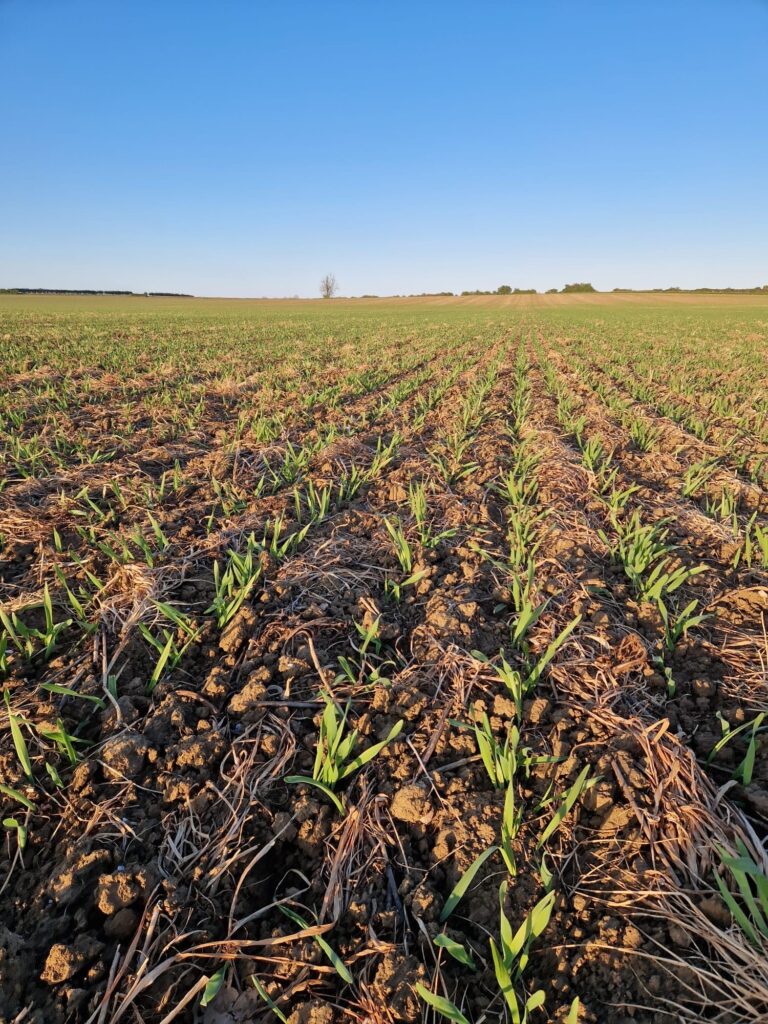
The most notable result came in this spring. “We actually direct drilled our malting barley,” says Phil. “We hadn’t planned to; it just wasn’t something we thought the ground would allow. But the cover crop had done enough to make it possible.”
Improved soil structure, reduced compaction and better drainage have all contributed to more flexible drilling options, particularly valuable on heavier land where timing can be critical.
“The heavy soils have really benefited. They’re holding structure better and maintaining drainage channels, which is a big change from where we were.”
The financial side has also stacked up. Through the Sustainable Farming Incentive (SFI), the cost of establishing the cover crops has been covered, with an additional margin achieved.
“The SFI payment has covered the cost of the cover crop and drilling, plus about £30/ha on top. That makes it a much easier decision to continue.”
Now in the first year of a three-year SFI agreement, Phil plans to build on the progress made so far.
“We’ll definitely carry on,” he says. “We’ll be putting more cover crops in post-harvest and following with spring cropping again.”
Working closely with COPE has been a key part of the process.
“They came out, looked at the fields and really listened to what we were trying to achieve. That made a big difference in getting the right mix and approach.”
For Phil, the results speak for themselves.
“It’s early days, but the improvements in soil structure and the ability to direct drill on land like this, it’s a big step forward.”